
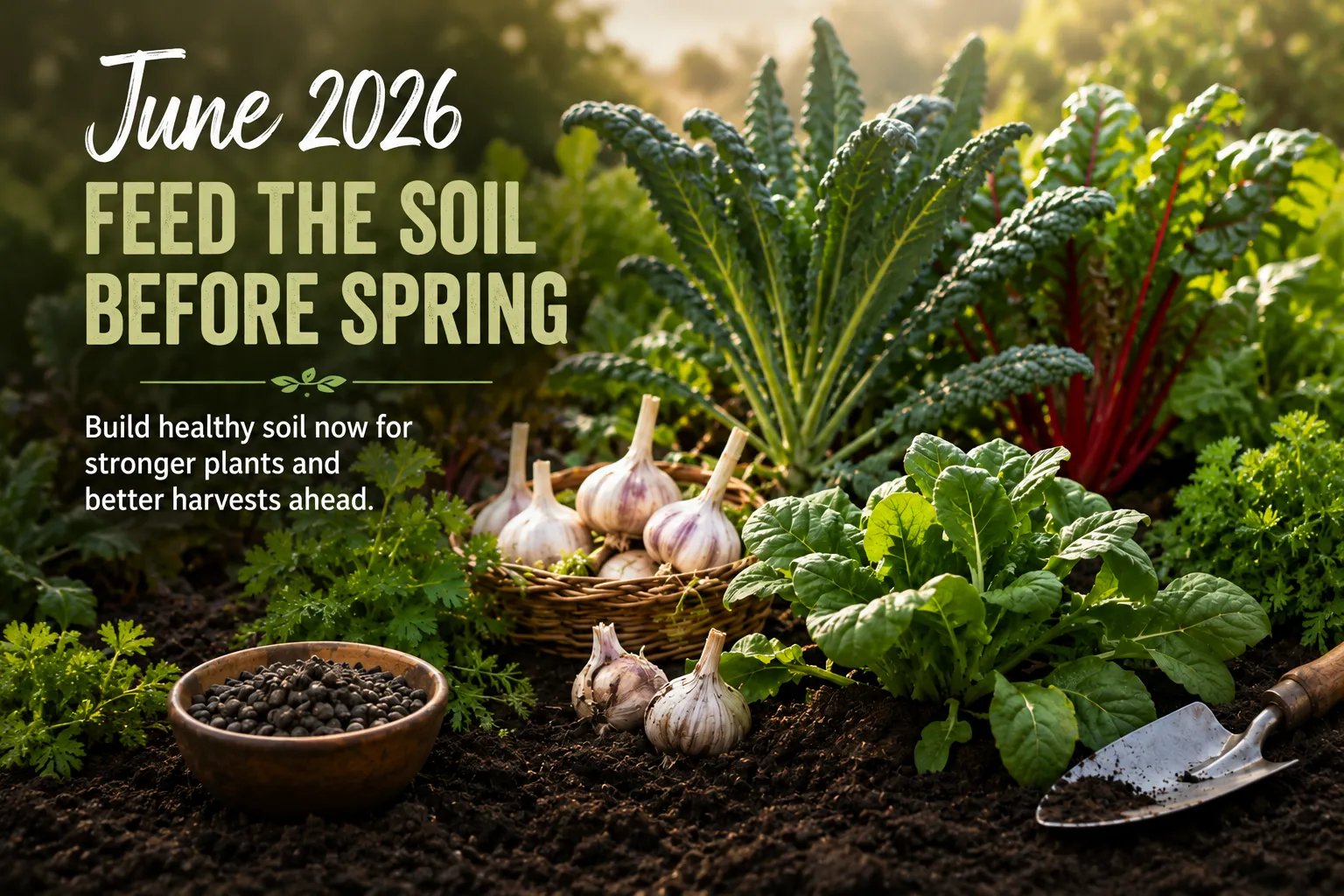
As winter settles in across New Zealand, June can feel like a quieter month in the garden. Growth slows, the days are shorter, and many summer crops are now finished. But while things may appear calm above the surface, this is one of the most important times of year to focus on what’s happening underneath — your soil.
June is the perfect month to recharge and rebuild your garden naturally, setting the foundation for healthier plants, stronger root systems, and better harvests when spring arrives.
One of the best ways to support your soil during winter is by adding organic matter along with humates. Humates are rich in natural carbon and trace minerals formed from ancient plant material. Rather than acting like a quick-release fertiliser, humates work slowly over time to improve soil structure, stimulate beneficial microbial life, and help retain nutrients where plants need them most.
Winter rain can often wash nutrients deeper into the soil, away from plant roots. Humates help reduce this leaching effect by holding nutrients in the root zone longer, making them more available when plants begin actively growing again in spring.
A great combination at this time of year is compost, sheep pellets, and humate. Together they create a powerful soil-conditioning blend:
-
- Compost improves soil structure and adds organic matter
- Sheep pellets provide natural nutrients and organic goodness
- Humates enhance microbial activity and improve nutrient uptake
At Dave’s Garden Products, our Growth Booster Pellets combine sheep manure and humate into one easy-to-use product. By blending humate directly into the sheep pellets during manufacturing, plants receive the benefits of both ingredients at the same time. The humate also helps reduce the strong lanolin smell often associated with sheep manure while speeding up the breakdown of the pellets in the soil.
June is also an excellent time to refresh compost bins. Cold weather can slow microbial activity right down, but adding a small amount of humate into your compost can help keep the breakdown process ticking along throughout winter. Humate acts as a food source for beneficial fungi and bacteria, helping create richer compost ready for spring planting.
If you’re sowing seeds this month, try mixing a small amount of humate into seed-raising mix or potting soil — around 5–10% is ideal. This can improve germination, support stronger root development, and encourage healthier seedlings early on.
What to Plant in June
Although growth is slower, there are still plenty of crops that do well in winter conditions.
Seeds to sow:
-
- Broad beans
- Kale
- Mustard greens
- Peas
- Silverbeet
- Spinach
- Asian greens
Seedlings to plant:
-
- Broccoli
- Cabbage
- Garlic
- Kale
- Shallots
- Spinach
- Strawberries
Garlic especially loves a cold start and performs beautifully when planted in June. When planting garlic, fruit trees, strawberries, or rhubarb crowns, mix compost and a handful of humate into the planting hole to encourage strong root establishment through winter.
As we approach the shortest day of the year, remember that vegetable growth naturally slows due to reduced sunlight. Seedlings started in trays or protected areas often establish faster during winter than direct sowing into cold soil.
Garden Tip for June
Before heavy winter rain arrives, spread humate around garden beds and lightly rake it into the soil or water it in. Applying it now allows time for the humate to work gradually through the soil profile over winter, ready for the busy growing season ahead.
Even though June may feel like a slower month in the garden, the work you do now is building the foundation for healthier soil, stronger plants, and more productive harvests in the months to come.
Happy Gardening,